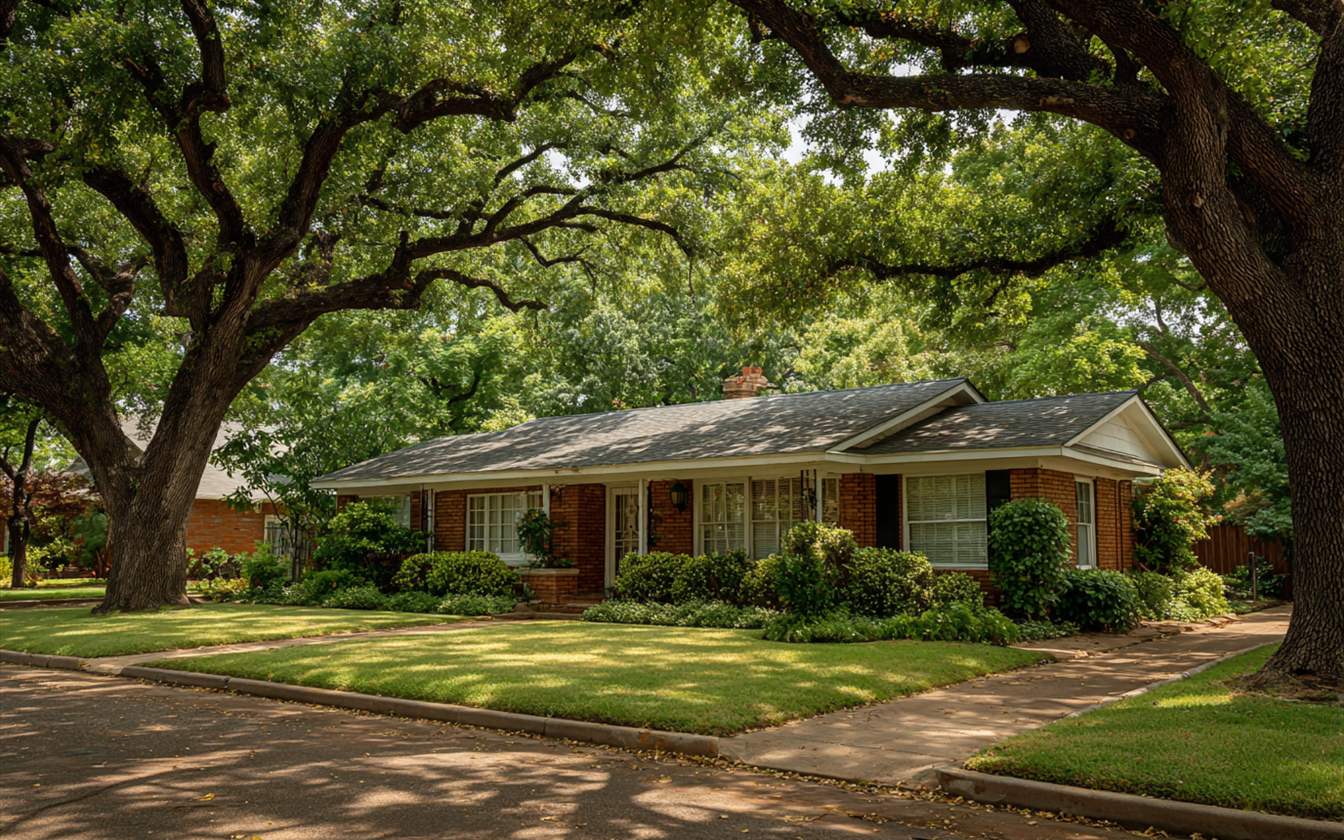
The shape of a roof changes what wind does to it. In Conroe and the rest of Montgomery County, most homes have either a hip roof, which slopes down on all four sides, a gable roof, which has two slopes and a triangular wall at each end, or a mix of both. Neither shape is right or wrong, but each one fails in its own places when a strong storm comes through.
The Two Shapes
| Hip roof | Gable roof | |
|---|---|---|
| What it looks like | Slopes on all sides, no flat end walls | Two slopes, triangular end walls |
| How wind moves over it | Flows over and around more evenly | Pushes hard against the end walls and lifts at the edges |
| Where damage starts | Ridges and hips (the sloping edges) | Rake edges along the gable ends, and the ridge |
| Common on | Many ranch and newer homes | Many older homes and two-story designs |
Research from wind-engineering groups has generally found hip roofs perform better in high winds. A gable roof built and fastened well can still hold up fine.
Where Wind Damage Shows Up
- Rake edges on gables. The shingles along the sloped edge of a gable end catch wind first.
- Ridges and hips. Cap shingles along the top and the sloping edges lift and break.
- Corners. Wind pressure is strongest at the corners of a roof.
- Overhangs. Wide overhangs can catch wind from below.
What Helps on a Reroof
- starter shingles with adhesive along every edge, including the rakes
- the full nailing pattern the manufacturer requires for high-wind installation
- ridge and hip caps made for high wind, fastened properly
- metal drip edge firmly fastened along eaves and rakes
Gable Vents and Wind-Driven Rain
Many gable-roofed homes have a vent near the peak of each gable wall. In a storm with strong wind blowing straight at that wall, rain can be pushed through the vent into the attic. If you find wet insulation under a gable vent after a windy storm, the roof may be fine; the vent is the entry point. A roofer can suggest a baffled vent or a change to the attic's ventilation plan during a reroof.
After a Windy Storm
Walk around the house and look at the edges and the peak from the ground. Lifted or missing shingles along gable ends and caps along the ridge are common after strong wind. Photograph them, and keep any pieces you find in the yard. Wind warnings for the area come from the National Weather Service in Houston/Galveston.
Questions
Should I change my roof shape?
Usually not. Changing a gable to a hip is a major structural project. A careful reroof with better edges and fastening is the practical step.
Why did only one side of my roof lose shingles?
The side facing the strongest gusts takes the most force. Corners and edges on that side go first.
Do metal roofs do better in wind?
Many standing seam systems perform very well in wind when installed correctly.
Around Conroe
Wind damage comes up often on open lots in Magnolia, around Downtown Conroe and in Cut and Shoot. Repairs are covered on roof repair.
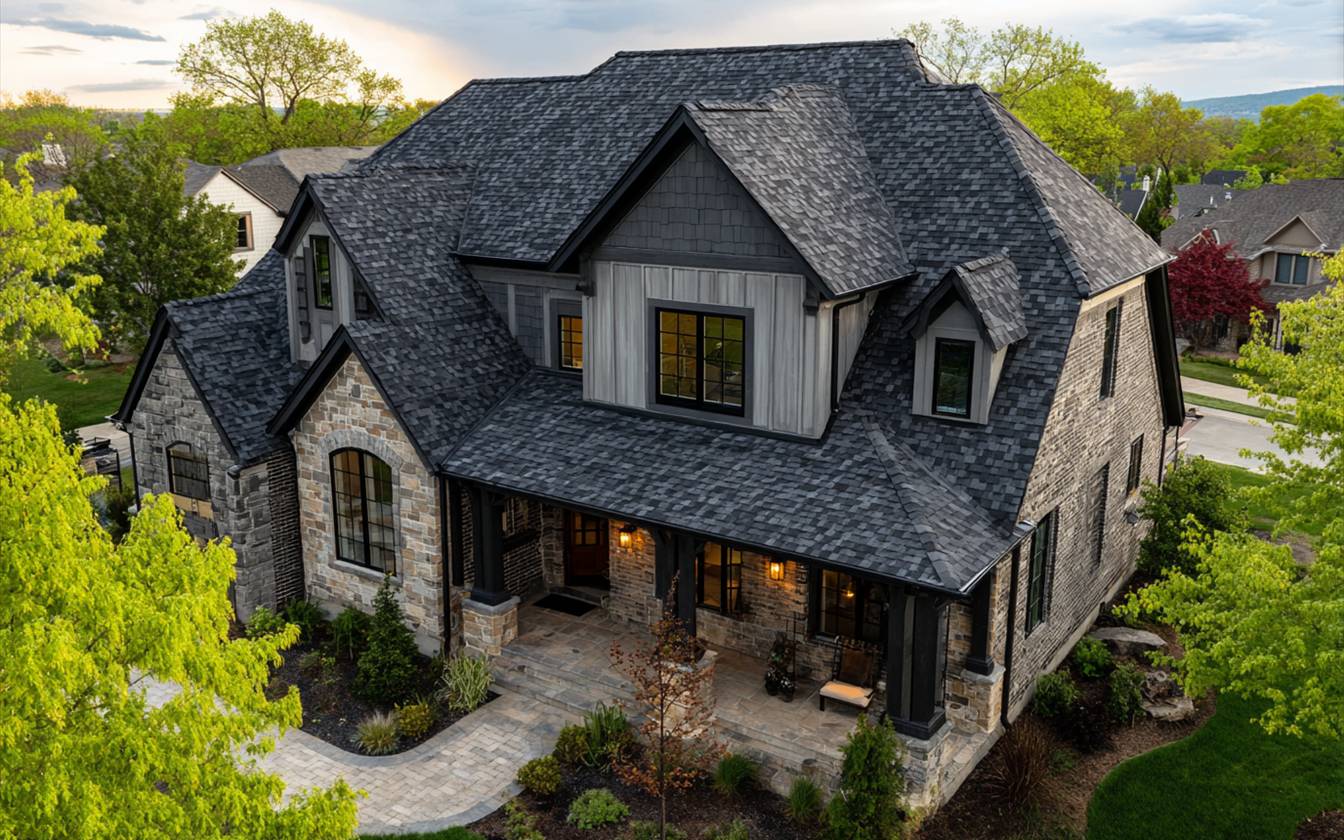
Two-Story Roofs With Many Valleys
Why newer homes leak where they do.

Lake Conroe Waterfront Roofs
Wind off the water, metal roofs and boathouses.